Vibrant Nutrients: QOTW: What's your go-to cooking salt and why?
Healthier Recipe: QOTW: What's your go-to cooking salt and why?. What's the role of salt in cooking? Is it important to add it at certain times? Most recipes (and culinary schools) advise seasoning food with salt early in the cooking process, not just at the end.
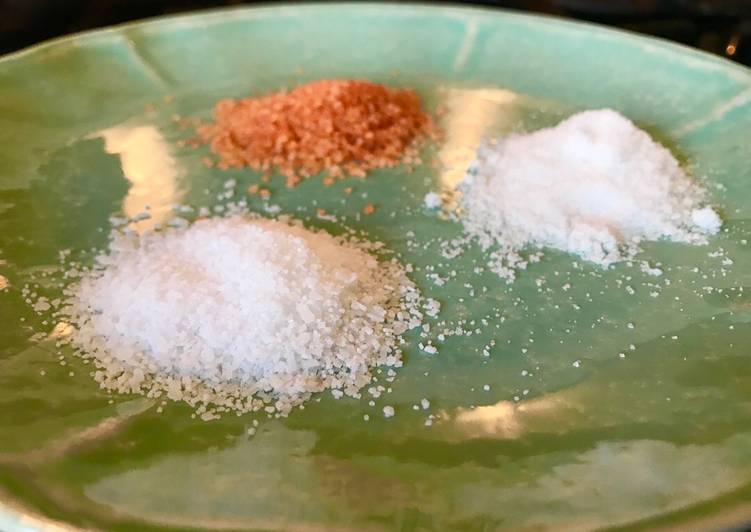 When exactly should you add salt to a dish? Our mission is to test recipes over and over again until we understand how and why they work and until we arrive at the best version. From pink Himalayan to table salt, here's everything you need to know about common types of salt at the grocery store, including when to cook with each. All you need to cook earlier than baking QOTW: What's your go-to cooking salt and why? using 1 ingredients and 2 steps. This is how it is best to make meals it.
Ingredients of QOTW: What's your go-to cooking salt and why?
Inside cooking method you require some critical seasonings. In the event generally there are some things that is definitely forgotten about in that case the result are not relative to your current expectations. To commence, you are able to make a number of the spices below.
- You need of that pillar of good seasoning, SALT!.
Even recipes aren't always helpful—some will recommend kosher salt, others won't specify, and most will never explain why you should use one. Once cooked, however, the enzymes completely loose their activity, and are just as harmless and nutritious as eating cooked egg whites. What are you planning to do with it? Are you roasting, charring, grilling, or microwaving a firm, young eggplant?
Step by step for QOTW: What's your go-to cooking salt and why?
To have great final results, be sure to stick to the cooking food information by using the subsequent QOTW: What's your go-to cooking salt and why? appropriately
- Let us know in comments what your favorite cooking salt is and why. If words only, use comment..
- If with a pic (because some salts really are so interesting to look at – I love looking at pink salt!) – post a Cooksnap!.
Pass "Go" and collect your unsalted To make things a bit more confusing, Ottolenghi, who is arguably our generation's Greatest Eggplant Advocate, salts his eggplant sometimes, but not others. Here are some reasons to salt after cooking. Salt protects the flour and oil from going rancid due Of course, when you salt the exterior, the salty flavor is "courser", less evenly distributed. Salting during cooking is a subtle technique to season certain ingredients/flavors and intensify their flavor. The salt is going to bind to really large molecules like proteins in the food and it'll be there, you'll be eating it, but it won't really be affecting the taste I can give you a whole series of sodium salts at the exact same concentration and have them go all the way from very salty to barely perceptibly salty at.
The crucial element you want to do before cooking any vegetable is to fix them thoroughly. Chances are you’ll don’t know there’s bacteria lingering on the fresh vegetables and definitely cannot see them along with the naked eye. Also,it is important to wash them for we can also never observe if chemicals were sprayed on them. Without the right cleaning examples of the chemicals maybe mixed into our food with the possibility of intoxicating us that could lead to health problems.
It’s important don’t overcook your vegetables to may be crunchy without having to mushy. Cooking it simply right would also enhance the laundry especially begin using bright colored veggies that can make any dish look so tempting to eat.
Back in QOTW: What's your go-to cooking salt and why?, how will you cook while using recipe above? If you haven’t felt the nice thing about these results, it is possible to your individual creations to suit your taste.
Source : Cookpad.com